
As urban transportation systems evolve, high-performance displays are becoming essential components — giving operators the tools to deliver real-time information, ensure passenger satisfaction, and maintain reliable operations. Industrial-grade displays specifically designed for transport applications help make this possible.
Transportation environments — whether inside vehicles, at stations, or in control hubs — demand more from displays than typical consumer monitors. Displays used in transit must deliver:
High resolution and sharp image clarity, ensuring schedules, alerts, maps, and other information are easy to read at a glance.
Durability and reliability under harsh conditions, including vibration, constant use, and wide temperature ranges.
Flexibility and versatility, able to interface with varied signal sources and mounting needs across buses, trains, kiosks, or station infrastructure.
These requirements make rugged, industrial-grade displays a better fit than standard consumer screens.
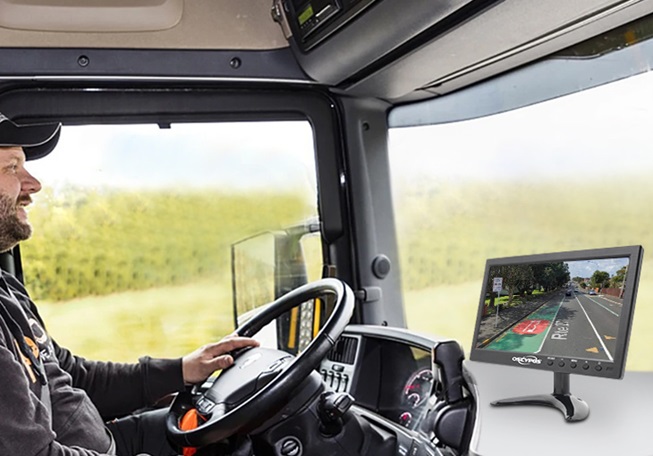
Industrial-grade displays built for smart transportation use typically include:
Wide operating temperature range and rugged construction: Able to withstand extreme heat or cold, vibration, and continuous 24/7 operation. Metal housings and robust internal components help ensure longevity in demanding transit environments.
Multiple input and power options: Support for a wide input-voltage range (e.g., 9 V–32 V) reduces the need for extra power converters, simplifying installation in vehicles or kiosks. Variety of interfaces — HDMI, VGA, AV, BNC, USB — allow integration with different systems.
Mounting and installation flexibility: Options like VESA-mount compatibility or open-frame designs facilitate embedding into dashboards, kiosks, control panels, or custom housings — making them suitable for vehicles, station terminals, or control centers.
Optional touch capability: Some models include resistive or capacitive touchscreens, enabling interactive functions — useful for kiosks, ticketing systems, wayfinding terminals, or operator consoles.
These rugged and versatile displays serve many roles in modern transportation infrastructure, including:
Onboard vehicle systems — buses, trains, or shuttles can use them for passenger information displays, route updates, and entertainment screens.
Station signage and information kiosks — dynamic displays at bus stops, train platforms, or in terminals for schedules, delays, gate/platform info, and wayfinding.
Control rooms and dispatch centers — for monitoring transit operations, managing routing or maintenance alerts, and displaying system dashboards.
Self-service terminals — such as ticketing kiosks, check-in stations, or digital information stands, often requiring touchscreen interaction and resilient hardware.
In effect, these displays are the backbone of “smart transportation” — enabling real-time information flow, improving passenger experience, and allowing transit operators to maintain efficient, responsive systems.
Manufacturers with dedicated expertise in industrial-grade monitors — rather than general-purpose displays — bring clear benefits for transportation projects:
Reliability under harsh conditions — because transit environments are demanding, using components built for industrial resilience ensures long lifespan and fewer failures.
Customization and integration support — ability to tailor features (power input, interfaces, mounting, touch capability) to match specific vehicle types, station configurations, or control room needs.
Compliance with global standards — many industrial monitors meet certifications and safety requirements, giving confidence when deploying at scale or across different geographies.
Scalable production and OEM/ODM flexibility — helpful when transit agencies or integrators need bulk orders or custom-branded solutions, while maintaining consistent quality and supply.
Deploying high-performance displays across transit systems yields tangible benefits:
Better communication and passenger information — clear, up-to-date display of schedules, delays, platform changes, and real-time alerts helps reduce confusion and anxiety for travelers.
Improved wayfinding and navigation — interactive kiosks and signage can guide passengers through complex stations, minimizing crowding and improving flow.
Operational flexibility and emergency responsiveness — centrally managed digital signage allows rapid deployment of alerts, schedule changes, or evacuation instructions when needed.
Enhanced revenue and service potential — displays can be used not only for transit info but also for advertising and announcements, helping transit systems monetize digital signage space or inform passengers about services and offers.
As public transport and urban mobility evolve, investing in rugged, versatile, high-performance displays is no longer optional — it’s critical. Whether for buses, trains, stations, or control centers, industrial-grade monitors designed for transportation unlock a new level of efficiency, safety, and user satisfaction. For any transportation system aiming to be “smart,” these displays form the foundation of a modern, responsive, and future-ready infrastructure.











 IPv6 network supported